
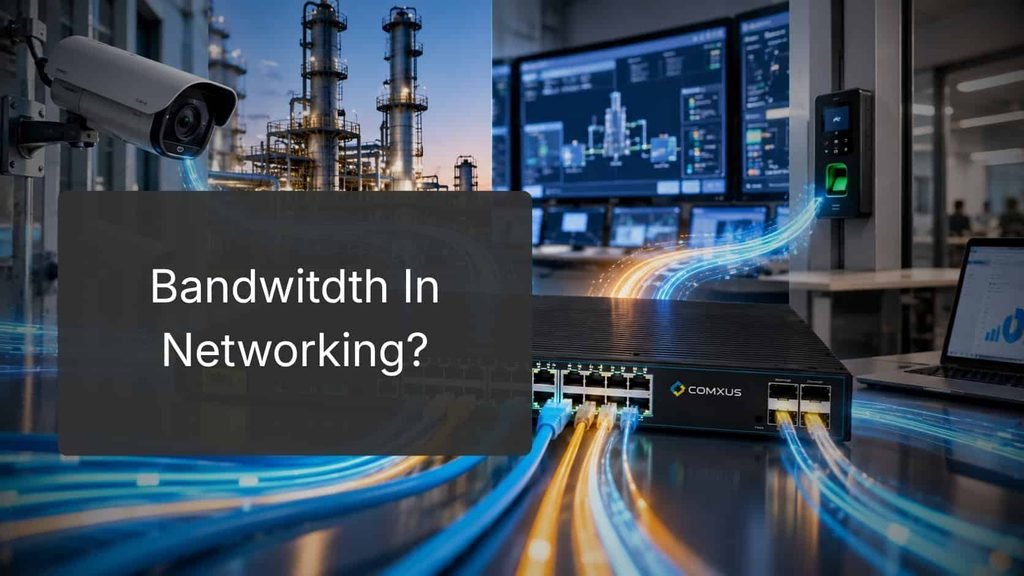
Bandwidth is one of the most important concepts in computer networking. It determines how much data a network connection can theoretically carry within a given period.
In simple terms, network bandwidth is the maximum data-carrying capacity of a network link, usually measured in bits per second (bps).
For a modern Indian industrial facility, bandwidth planning is particularly important because one network may carry CCTV video, SCADA communication, PLC traffic, access control, servers, VoIP/PAGA, Wi-Fi and corporate IT traffic simultaneously.
However, bandwidth is not the same as actual network speed or performance. Understanding this difference is essential when designing an industrial Ethernet network.
For example, a 1 Gbps Ethernet port has a nominal bandwidth of 1 Gigabit per second, this does not mean that an application will always transfer data at exactly 1 Gbps.
Actual throughput can be affected by:
- Protocol overhead
- Network congestion
- Packet size
- Device performance
- Cable quality
- Switching capacity
- Processing limitations
- Traffic patterns
- Network configuration
What is the difference between Bandwidth & Throughput?
Now some of you might be thinking, what is the Throughput now?
Well in simple terms,
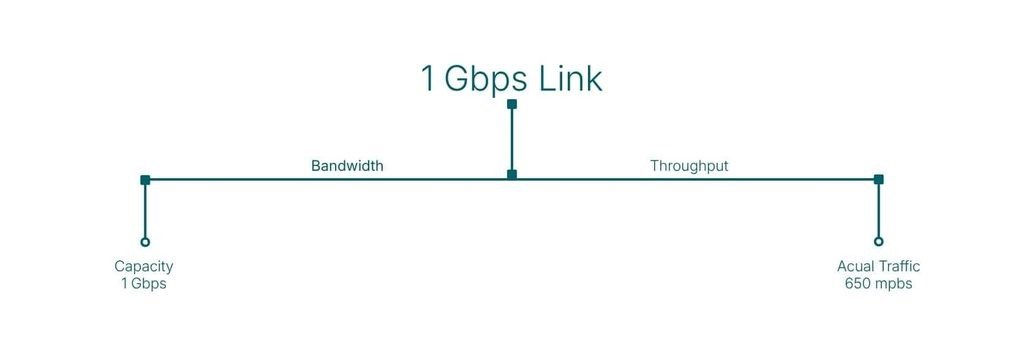
Bandwidth represents capacity, while throughput represents the amount of data actually transferred.
For example, consider a 1 Gbps uplink:
The link has 1 Gbps bandwidth, but the current traffic may only be using 650 Mbps.
This distinction becomes important when designing networks for CCTV and industrial automation.
Why Is Bandwidth Important in Industrial Networking?
Industrial networks increasingly carry large volumes of data.
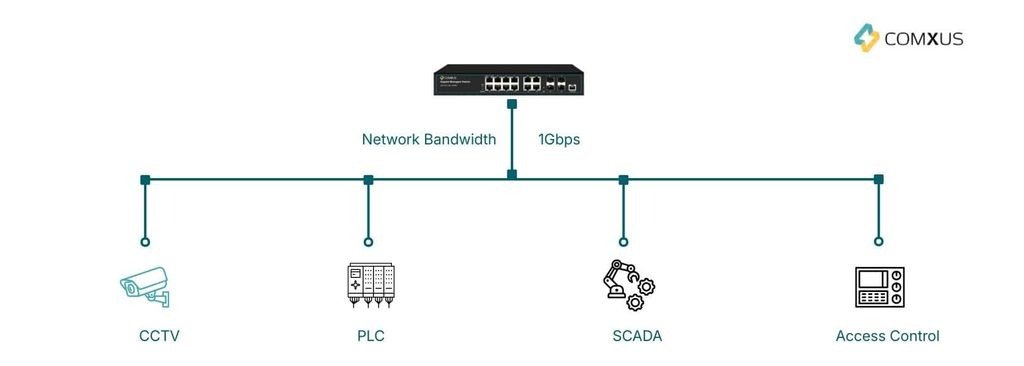
- Hundreds of IP cameras
- PLCs and HMIs
- SCADA servers
- VMS/NVR systems
- Access-control devices
- Industrial sensors
- A single facility may have:
Each system generates network traffic. If the network’s available bandwidth is insufficient, congestion can occur.
Bandwidth vs Speed
Bandwidth and speed are related but should not be treated as identical. A 10 Gbps Ethernet link provides greater data-carrying capacity than a 1 Gbps link. However, application performance also depends on:
- Server capability
- Storage performance
- Network architecture
- Latency
- Protocol efficiency
- Traffic congestion
- Endpoint interfaces
Now let’s say, if there is a CCTV camera, which is connected through 1G access port on the core switch. Which has 10G uplink port. That does not mean the camera operates at 10 Gbps. It simply provides a higher-capacity path for aggregated traffic.
What Is Network Congestion?
Network congestion occurs when the traffic demand approaches or exceeds the available capacity of a network link. When network congestion happens, you may notice following errors.
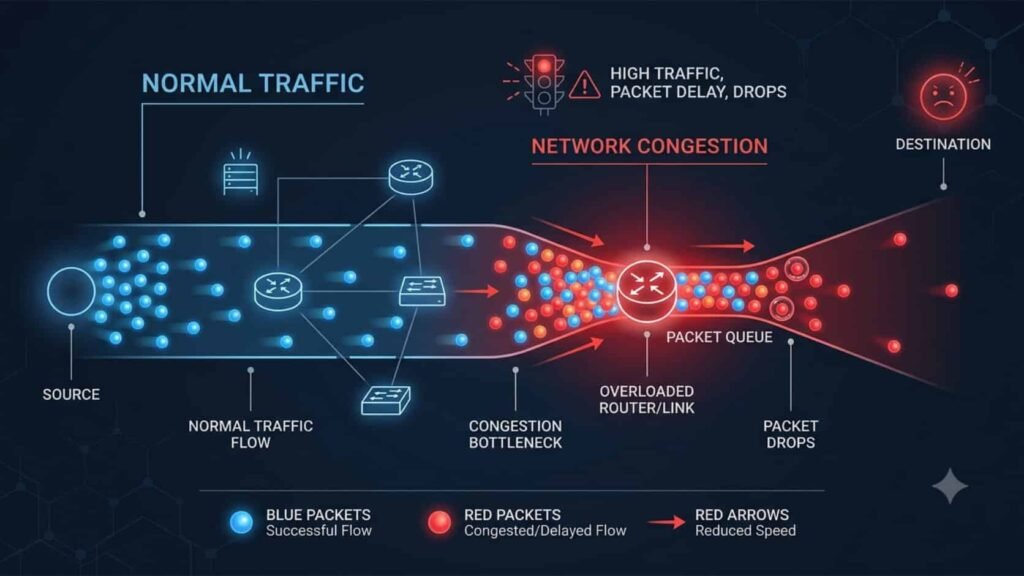
- Increased latency
- Retransmissions
- Video buffering
This is why uplink bandwidth should be calculated based on expected traffic rather than simply selecting the highest-speed switch port available.
Frequently Asked Questions
Is 1 Gbps bandwidth faster than 100 Mbps?
Yes, A 1 Gbps link has ten times the nominal capacity of a 100 Mbps link.
Is bandwidth the same as internet speed?
Not exactly. Bandwidth represents capacity, while actual data transfer depends on several network and application factors.
How much bandwidth does an IP camera use?
It depends on resolution, frame rate, codec, scene complexity and configured bitrate. A camera may use a few Mbps, but the actual value should be taken from the camera’s configuration or project design.
Does VLAN increase bandwidth?
No. VLAN provides logical segmentation but does not increase the physical capacity of the network link.
Why is bandwidth important for CCTV?
High-resolution IP cameras can generate substantial continuous traffic. Aggregating many cameras can quickly consume a 1 Gbps uplink, making bandwidth planning important for surveillance networks.
Conclusion-
Bandwidth is the data-carrying capacity of a network connection, but it is only one part of network performance.
For industrial environments, bandwidth planning becomes increasingly important as CCTV, SCADA, PLC, access control, PAGA, servers and enterprise IT systems converge onto Ethernet infrastructure.
