
RSTP vs MRP: What’s the Difference?
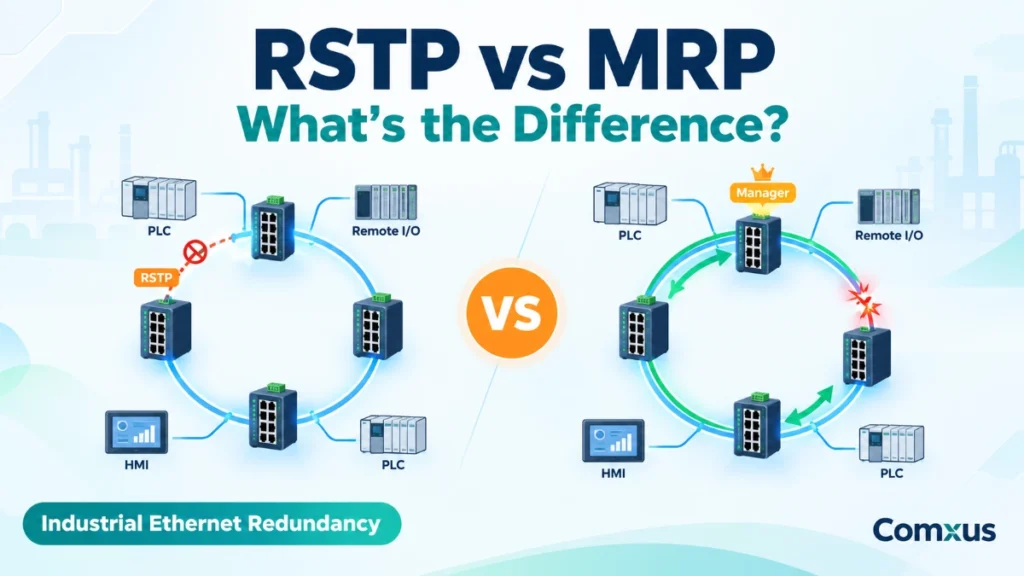
Picture a factory floor with a ring of industrial Ethernet switches linking PLCs, remote I/O, HMIs and drives. What happens if one Ethernet link in the ring fails? Without redundancy, part of the network may lose communication. Redundancy protocols manage alternate paths so connectivity can continue after certain failures. Two common options are RSTP (Rapid […]
What Is IEEE 802.1Qbv? A Simple Guide to Time-Aware Shaper in TSN
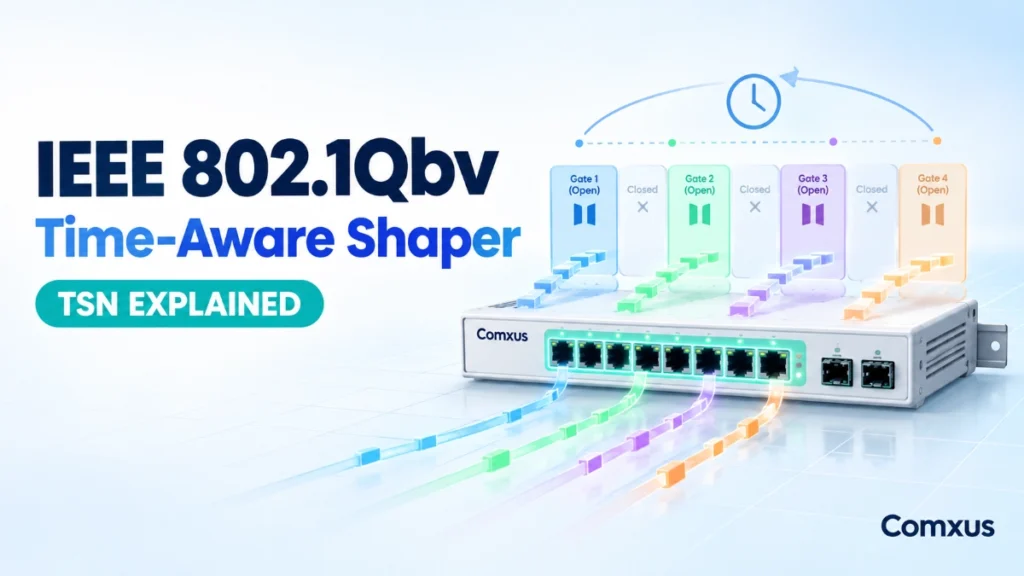
What is IEEE 802.1Qbv? IEEE 802.1Qbv is a TSN standard that defines time-aware scheduling mechanisms for controlling when different traffic queues can transmit through an Ethernet switch. Introduction Picture a production line where a PLC sends control commands, drives exchange motion-control data, sensors report status, and a camera streams video. Diagnostics and general Ethernet traffic […]
Multi-Vendor TSN Interoperability in 2026: What the Latest Test Results Actually Reveal
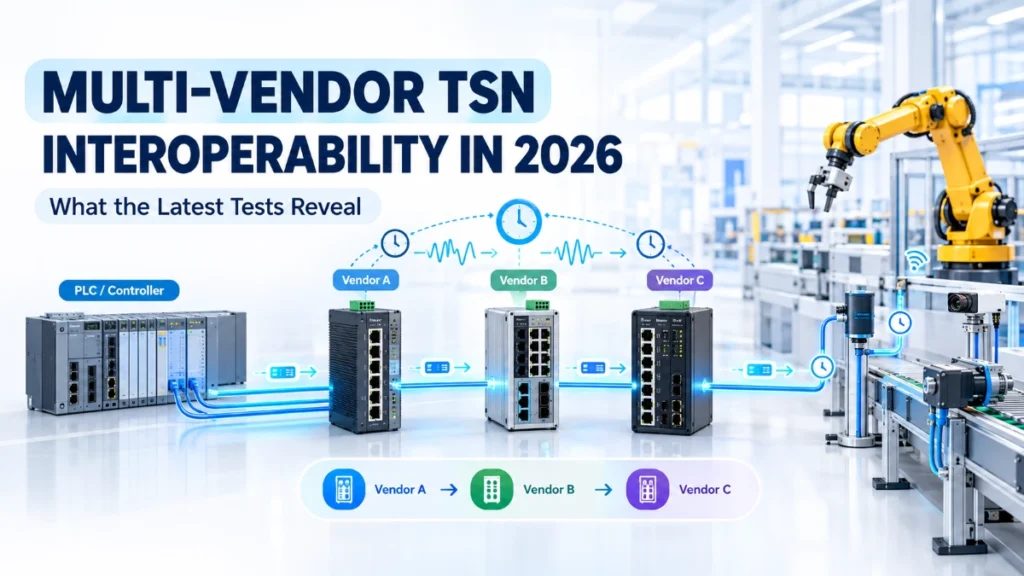
Multi-Vendor TSN Interoperability in 2026 is becoming less about proving that Time-Sensitive Networking works and more about proving that different manufacturers can make it work together. That distinction is becoming increasingly important as industrial networks move toward more open architectures. A modern production environment may include PLCs, controllers, drives, remote I/O, industrial switches and field […]
Industrial Ethernet at the Edge: Connecting Machines, IIoT and Cloud
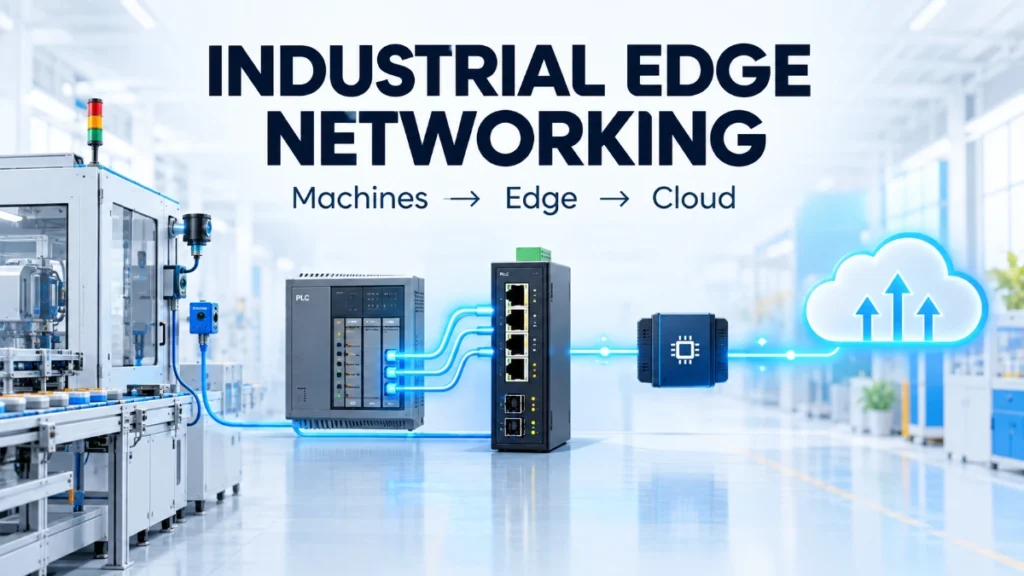
A production machine on the factory floor is constantly generating data: temperature readings, vibration signatures, energy consumption, cycle counts, machine status. That data has value, but only if it actually gets somewhere useful: collected locally, processed close to the machine, and in many cases forwarded to a factory server or cloud platform. So how does […]
How to Troubleshoot Packet Loss in Industrial Ethernet
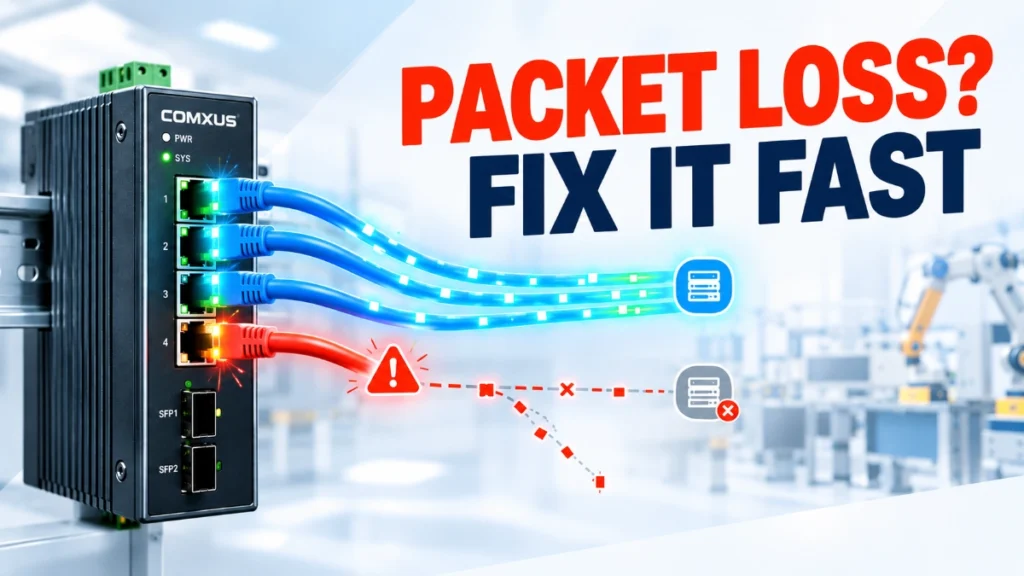
A PLC on the plant floor starts dropping its connection to a remote I/O rack intermittently, with no obvious pattern. The HMI freezes for a few seconds, throws a communication alarm, then recovers. An operator restarts the device, and it works again… for a while. This is a classic sign of packet loss in industrial […]
IEEE 802.1AS Explained: Time Synchronisation in TSN
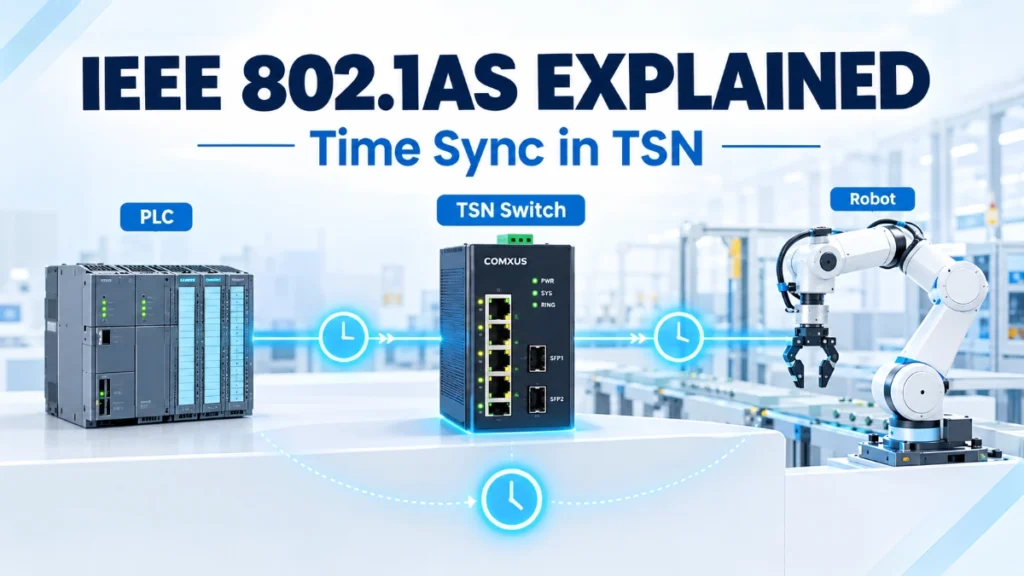
Imagine several machines working together on the same production line: a PLC triggering a robotic arm, a drive adjusting motor speed and a vision system inspecting the output. If every device has a slightly different idea of what time it is, coordinating these actions becomes difficult. Packets can arrive reliably and still be useless if […]
TSN vs Standard Ethernet: What Changes in Industrial Automation?
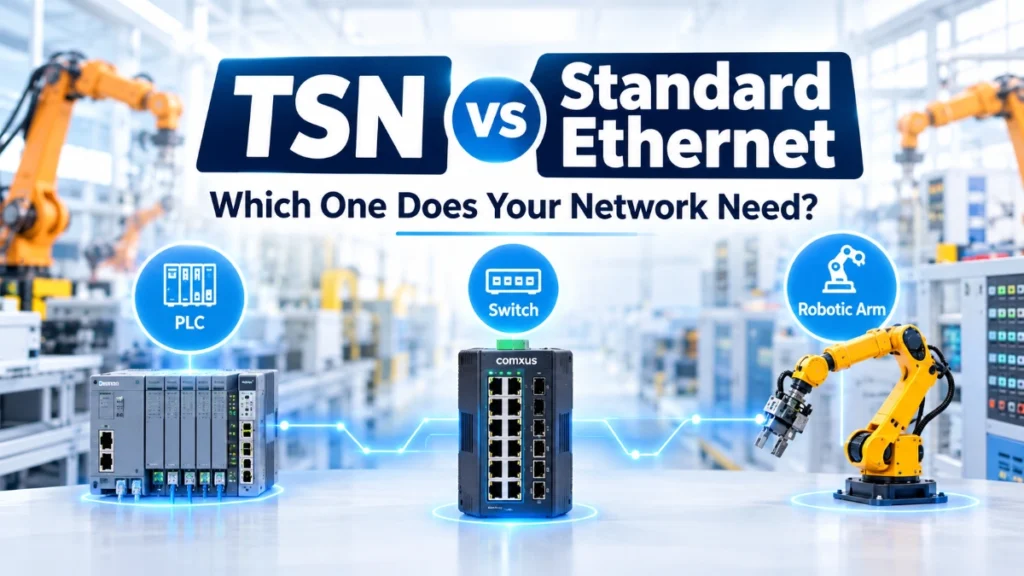
On a modern factory floor, a robotic arm, a vision system, and a PLC often need to act within microseconds of each other. Standard Ethernet handles most industrial traffic well, but it wasn’t built for guaranteed timing. This is where the TSN vs Standard Ethernet comparison becomes critical because in automation, a few milliseconds of […]
PROFINET Networking: How Industrial Ethernet Switches Support Automation Systems
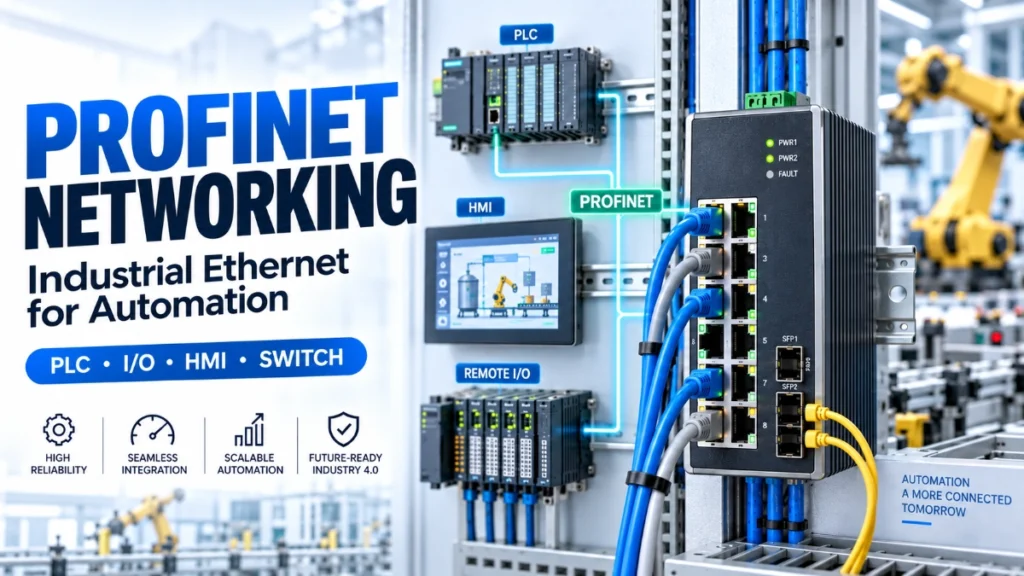
Picture a packaging line running PLCs, HMIs, remote I/O blocks, VFDs, and a handful of robots all talking to each other continuously over Ethernet. When that communication runs on PROFINET, the humble Ethernet switch sitting in the control panel becomes far more than a box that passes traffic between ports. It’s part of the deterministic […]
Understanding DIN-Rail Industrial Ethernet Switches
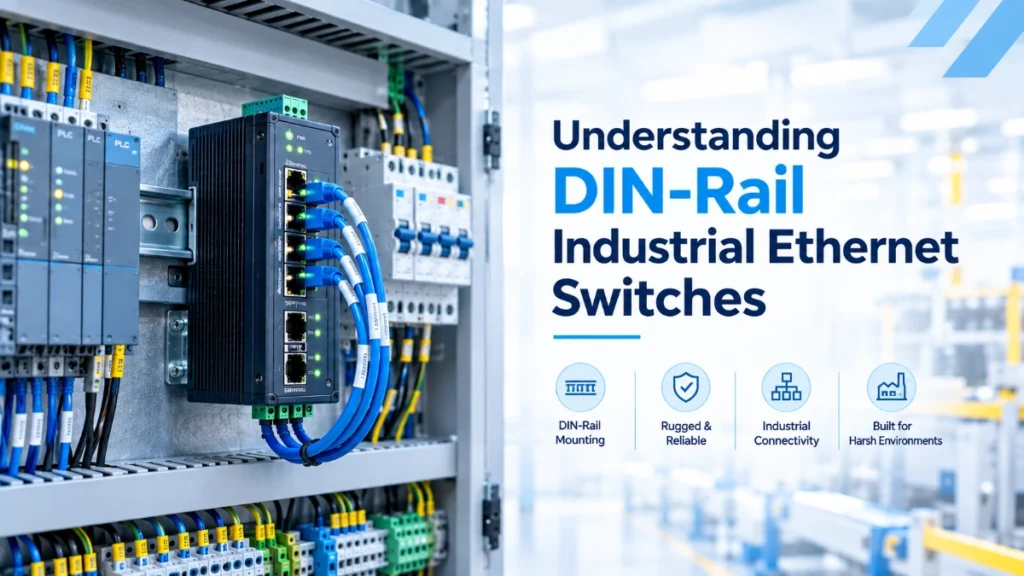
Walk into any modern industrial control panel, and you’ll notice a familiar pattern: PLCs, circuit breakers, terminal blocks and power supplies all clipped neatly onto a metal rail, wired in an organised row. Networking equipment needs to fit into that same layout. This is exactly why DIN-rail industrial Ethernet switches exist: they let engineers add […]
What Is a Good PoE Budget for an Industrial PoE Switch?

When choosing a PoE switch, the number of Ethernet ports is only part of the decision. PoE power budget is equally important because it determines how many powered devices, such as IP cameras, wireless access points, intercoms, sensors, and other industrial endpoints, can operate simultaneously. For small industrial networks, PoE switches commonly fall into different […]