
Industrial networks are evolving with increasing data demands and real-time communication requirements. Choosing the right Ethernet speed is critical for performance and reliability. Many engineers often compare Gigabit Ethernet and Fast Ethernet switches when designing industrial networks.
Both technologies are widely used in automation systems. However, their capabilities differ in terms of speed, scalability, and application suitability. Selecting the wrong type can lead to network bottlenecks or unnecessary costs.
This article explains the practical differences between Gigabit and Fast Ethernet industrial switches. The focus is on real-world industrial applications and network design considerations.
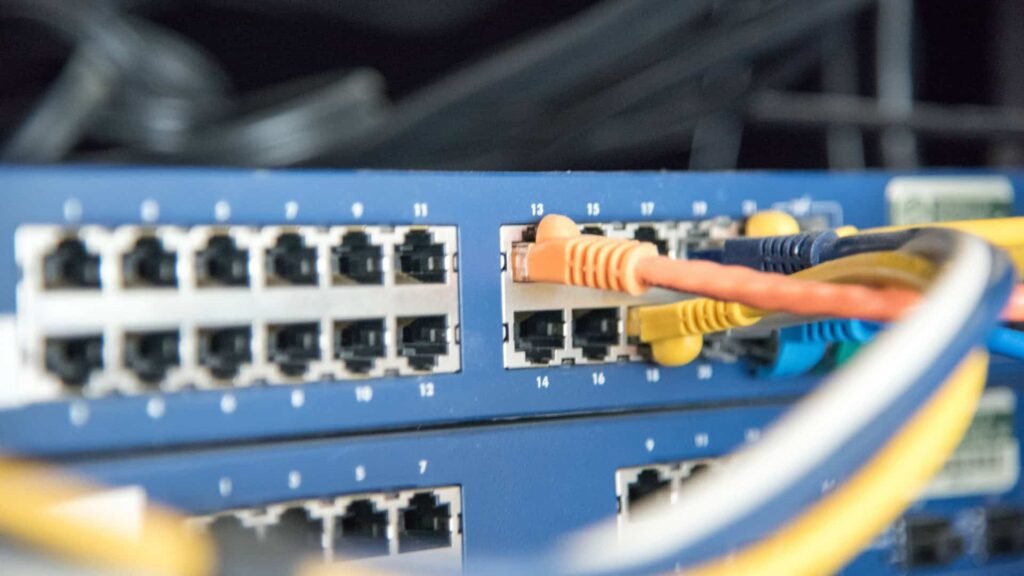
What is a Fast Ethernet Industrial Switch?
A Fast Ethernet industrial switch supports data transfer speeds up to 100 Mbps. It operates using the IEEE 802.3u standard.
These switches are commonly used in legacy industrial networks. They are suitable for applications with low to moderate bandwidth requirements.
Fast Ethernet switches are often deployed in:
- Basic PLC communication networks
- Small automation systems
- Legacy control systems
- Simple machine-level connectivity
They provide stable and predictable communication. This is important for deterministic industrial protocols.
Key characteristics include:
- 10/100 Mbps port speeds
- Lower power consumption
- Cost-effective deployment
- Sufficient for low data traffic environments
Fast Ethernet switches are still relevant in many industries. They work well where bandwidth demand is limited and network complexity is low.
What is a Gigabit Ethernet Industrial Switch?
A Gigabit Ethernet industrial switch supports speeds up to 1000 Mbps. It follows the IEEE 802.3ab standard.
These switches are designed for modern industrial applications. They handle high data volumes and support advanced networking features.
Gigabit switches are commonly used in:
- High-speed automation networks
- Industrial IoT deployments
- Video surveillance systems
- Data-intensive SCADA environments
They provide higher bandwidth and faster data transfer. This reduces latency and improves overall network performance.
Key characteristics include:
- 10/100/1000 Mbps port speeds
- High backplane capacity
- Better support for real-time applications
- Future-ready network infrastructure
Gigabit switches are becoming the standard in new industrial deployments. They support growing data needs and system integration.
Core Differences Between Gigabit and Fast Ethernet Switches
The main difference lies in speed, but several other factors also matter in industrial environments.
| Feature | Fast Ethernet Switch | Gigabit Ethernet Switch |
| Speed | Up to 100 Mbps | Up to 1000 Mbps |
| Bandwidth Capacity | Limited for modern applications | High bandwidth for data-intensive tasks |
| Use Case | Small or legacy systems | Large and modern industrial networks |
| Scalability | Limited scalability | Highly scalable |
| Cost | Lower initial cost | Higher initial cost but better long-term value |
Gigabit switches offer significantly higher throughput. This makes them suitable for modern automation and IIoT systems.
Fast Ethernet switches are still useful in controlled and low-demand environments.
Where to Use Gigabit and Fast Ethernet Switches
Both switch types have specific roles in industrial network architecture. The choice depends on application requirements and network design.
Use of Fast Ethernet Switches
Fast Ethernet switches are suitable for smaller and less complex networks. They are often used at the edge of the network. Typical applications include:
- Connecting basic PLCs and sensors
- Machine-level automation systems
- Legacy equipment integration
- Low bandwidth monitoring systems
They are ideal where data traffic is predictable and limited. For example, a small production unit with minimal data exchange can use Fast Ethernet effectively.
They also consume less power. This makes them suitable for energy-sensitive environments.
However, they may become a bottleneck in modern systems with higher data demands.
Use of Gigabit Ethernet Switches
Gigabit Ethernet switches are designed for high-performance industrial networks. They are used in both access and core layers.
Typical applications include:
- SCADA systems with real-time data processing
- Industrial video surveillance networks
- IIoT and smart factory environments
- Backbone connectivity between switches
In large plants, Gigabit switches handle heavy traffic efficiently. They support faster communication between controllers, servers, and cloud platforms.
They are also important for applications involving large data packets. Examples include video streams and analytics data.
Gigabit switches reduce network congestion. This improves system reliability and response time.
They also provide better support for future expansion. As data demand increases, Gigabit infrastructure remains stable.
Performance and Network Efficiency Considerations
Network performance depends on both speed and design. Gigabit switches provide higher throughput and lower latency under heavy load.
Fast Ethernet switches perform well in stable and low-traffic environments. However, they struggle when network demand increases.
In industrial environments, packet loss and delay can affect production. Therefore, bandwidth planning is critical.
Gigabit switches support advanced features like QoS and traffic prioritization more effectively. This ensures critical data is delivered on time.
Using a mix of both switch types is a common strategy. Fast Ethernet can be used at the edge, while Gigabit handles backbone traffic.
Gigabit and Fast Ethernet industrial switches serve different roles in network design. Both are important depending on application requirements.
Fast Ethernet switches are cost-effective and suitable for simple networks. They perform well in low bandwidth environments.
Gigabit Ethernet switches provide higher speed, better scalability, and improved performance. They are essential for modern industrial automation systems.
For engineers and system integrators, the choice should be based on data load, scalability, and future requirements. A well-planned network ensures reliability, efficiency, and long-term success.
