
Choosing the right 8 port industrial PoE switch for PLC systems is not a simple task. Industrial automation requires stable communication, reliable power delivery, and strong network performance. A wrong selection can lead to downtime and communication failures.
If you are working with PLC networks, your switch must handle real-time data traffic. It should also support industrial protocols and harsh environments.
In this guide, I will explain how to choose the right switch based on practical industrial requirements.
What is the Role of PoE in PLC Networks?
Power over Ethernet allows a single cable to transmit both data and power. This reduces wiring complexity and installation cost.
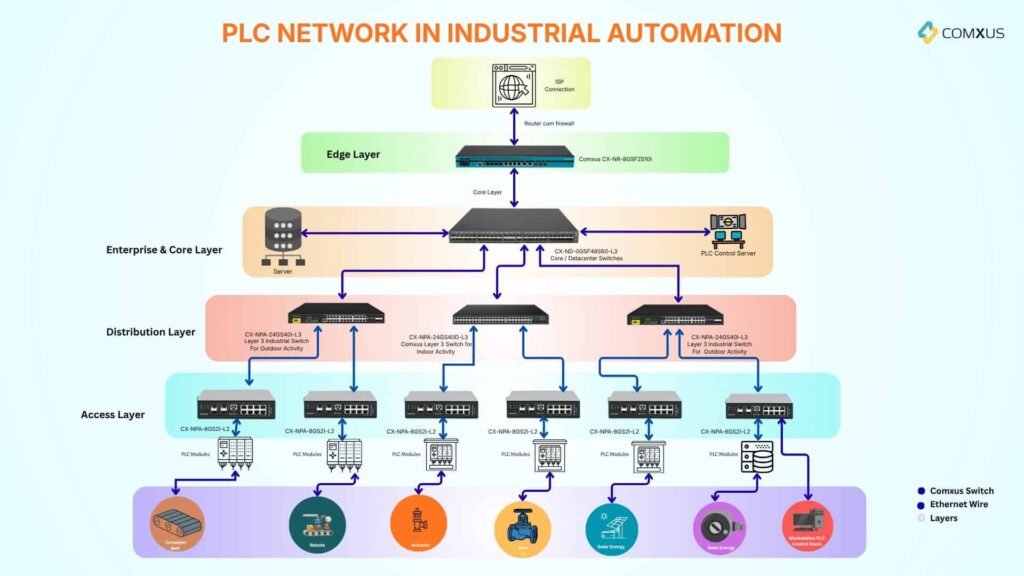
In PLC environments, PoE is useful for powering devices like IP cameras, HMI panels, and wireless access points. The switch automatically detects compatible devices and supplies required power.
This makes PoE switches ideal for compact and efficient industrial setups.
How To Check PoE Power Budget and Standards?
One of the first things I always check is the PoE power budget. This defines how much total power the switch can supply.
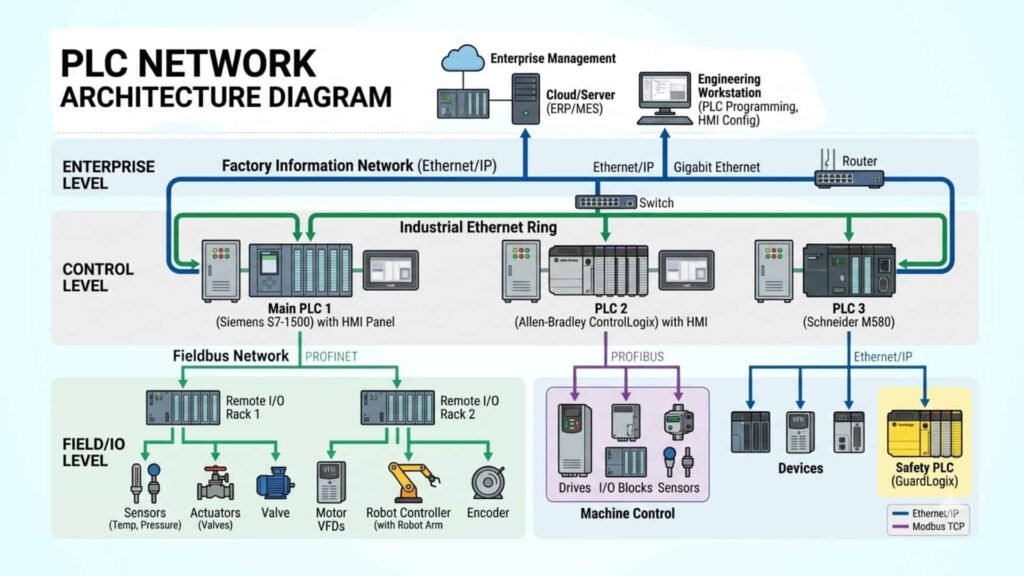
You should verify:
- Total PoE budget (example: 120W, 240W, or higher)
- Per port power (15.4W for 802.3af, 30W for 802.3at)
A good switch should support IEEE 802.3af or 802.3at standards. This ensures compatibility with industrial devices.
Always calculate total device power before selecting the switch.
How To Choose Between Managed and Unmanaged Switch?
This decision depends on your network complexity. but before that we have to understand the difference between managed and unmanaged switch?
Unmanaged switches are simple and plug-and-play. They are suitable for small PLC systems.
Managed switches offer better control and visibility. They support VLAN, QoS, and monitoring features.
For industrial automation, I strongly recommend industrial grade managed switches. They help in traffic prioritization and troubleshooting.
Consider Network Speed and Uplink Options
PLC networks today require higher bandwidth. Especially when integrated with SCADA or IIoT systems.
You should always prefer Gigabit Ethernet ports. They provide better performance compared to Fast Ethernet.
Also, check for uplink options like SFP ports. These allow long-distance fiber communication.
Gigabit and SFP uplinks improve backbone connectivity. They also reduce network congestion in large plants.
Evaluate Industrial Design and Reliability
Industrial environments are harsh. Your switch must be designed to handle these conditions.
Look for features like:
- Wide temperature range (-40°C to 85°C)
- Metal enclosure for heat dissipation
- Resistance to vibration and shock
- DIN rail mounting support
Industrial switches are built to operate reliably under extreme conditions.
This ensures long-term stability in factory automation systems.
Check Redundancy and Network Reliability Features
PLC networks cannot afford downtime. Even a small failure can stop production.
Your switch should support redundancy protocols and other industrial communication protocols like:
- RSTP (Rapid Spanning Tree Protocol)
- MRP (Media Redundancy Protocol)
- ERPS (Ethernet Ring Protection Switching)
These features ensure fast recovery during network failure. They improve overall system reliability.
Look for Security and Traffic Control Features
Security is becoming critical in industrial networks. A PoE switch should offer basic protection mechanisms.
Important features include:
- VLAN for network segmentation
- QoS for prioritizing PLC traffic
- Access Control Lists for filtering traffic
Managed switches provide better control over data flow. This is important for real-time PLC communication.
Conclusion-
Choosing the right 8 port industrial PoE switch for PLC systems requires careful evaluation. You must consider power budget, speed, reliability, and environmental factors.
From my experience, a managed Gigabit PoE switch with SFP uplinks works best for most industrial applications. It provides flexibility, control, and scalability.
Always align your switch selection with your PLC architecture and future expansion plans. A well-chosen switch improves performance, reduces downtime, and ensures smooth industrial operations.
