
Industrial networks are becoming more complex and data-driven. Choosing the right switching layer is critical for performance and reliability. Many engineers often compare Layer 2 and Layer 3 industrial switches.
Both serve different purposes in industrial automation networks. Understanding their roles helps in designing efficient and scalable systems.
This article explains the differences with practical insights for engineers and system integrators.
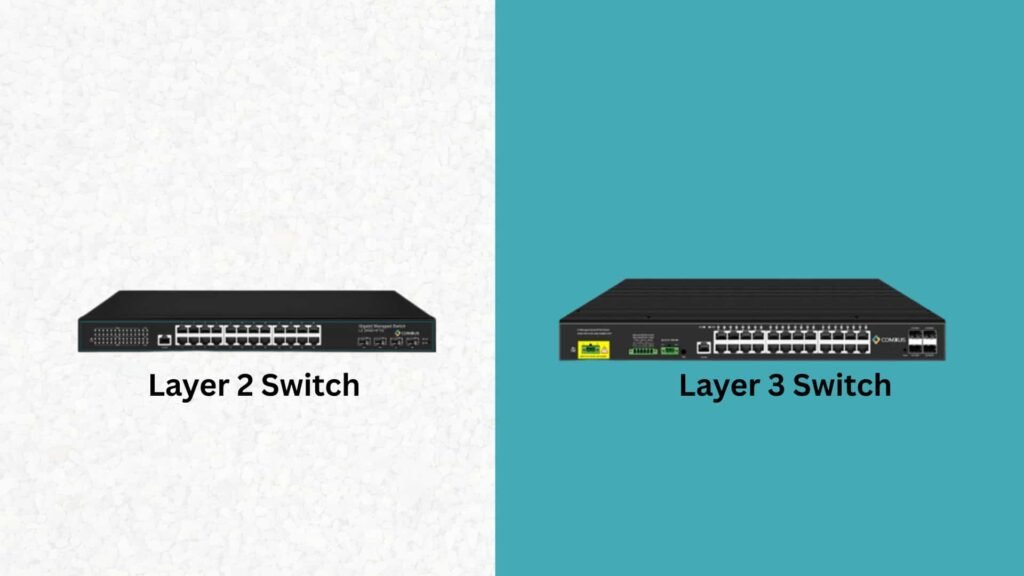
What Is a Layer 2 Industrial Switch?
Layer 2 switches operate at the data link layer of the OSI model. They forward data using MAC addresses instead of IP addresses.
These switches are commonly used within a local network segment. They connect field devices such as PLCs, sensors, drives, and HMIs.
Layer 2 switches maintain a MAC address table. This table helps them send data only to the intended device. This improves efficiency and reduces unnecessary traffic.
They also support VLANs. VLANs allow logical segmentation of a network without changing physical connections.
Key features of Layer 2 industrial switches include:
- MAC-based packet forwarding
- VLAN configuration for segmentation
- Loop prevention using RSTP or MRP
- Low latency for real-time communication
Layer 2 switches are ideal for deterministic industrial protocols. Protocols like PROFINET and EtherNet/IP perform well in such environments.
They are simple to deploy and cost-effective. Maintenance is also easier compared to advanced switches.
What Is a Layer 3 Industrial Switch?
Layer 3 switches operate at the network layer of the OSI model. They can route data using IP addresses.
These switches combine the functionality of a switch and a router. They are designed for larger and more complex networks.
Layer 3 switches enable communication between different VLANs and subnets. This is known as inter-VLAN routing.
They support both static and dynamic routing protocols. This allows better traffic control and path optimization.
Key features of Layer 3 industrial switches include:
- IP-based routing and packet forwarding
- Inter-VLAN communication
- Access Control Lists for traffic filtering
- Advanced Quality of Service management
Layer 3 switches are widely used in plant-wide networks. They help connect multiple production lines and integrate OT with IT systems.
They also improve network security and segmentation. This is important for compliance with industrial cybersecurity standards.
Core Difference Between Layer 2 and Layer 3 Switches
Below is a comparison table highlighting the key differences:
| Feature | Layer 2 Switch | Layer 3 Switch |
| Operating Layer | Data Link Layer (Layer 2) | Network Layer (Layer 3) |
| Address Used | MAC Address | IP Address |
| Main Function | Switching within same network | Routing between networks |
| Network Size | Small to medium networks | Large and complex networks |
| Security & Control | Basic security features | Advanced security and traffic control |
This comparison clearly shows that Layer 2 switches focus on speed and simplicity. Layer 3 switches focus on control, scalability, and routing intelligence.
Where can you use the layer two and layer switches
Layer 2 and Layer 3 switches are used in different parts of an industrial network. Each has a specific role depending on the network design.
Use of Layer 2 Switches
Layer 2 switches are typically deployed at the access level. This is the layer where field devices connect to the network.
Common use cases include:
- Machine-level communication between PLCs and I/O devices
- Connecting sensors, actuators, and HMIs
- Implementing ring topologies with redundancy protocols
- Applications requiring low latency and real-time performance
In a manufacturing plant, Layer 2 switches are often installed inside control panels. They ensure fast and stable communication between automation components.
Use of Layer 3 Switches
Layer 3 switches are used at the distribution or core layer of the network. They handle communication between different network segments.
Common use cases include:
- Interconnecting multiple production lines
- Routing traffic between VLANs and subnets
- Connecting plant networks to enterprise IT systems
- Implementing network segmentation for cybersecurity
In large industrial setups, Layer 3 switches act as the backbone of the network. They manage traffic flow across departments and systems.
They are also essential for Industrial IoT applications. These applications require data exchange between edge devices and cloud platforms.
Layer 3 switches improve network scalability. They allow easy expansion without affecting performance.
Conclusion:
Layer 2 and Layer 3 switches are both essential components of industrial network infrastructure. Each serves a specific purpose in automation systems.
Layer 2 switches provide fast and efficient communication within local networks. They are simple, reliable, and cost-effective.
Layer 3 switches add routing capability, advanced security, and better traffic control. They are suitable for large and complex networks.
A well-designed industrial network uses both switch types strategically. Layer 2 switches handle field-level communication, while Layer 3 switches manage network-wide traffic.
Understanding their roles helps engineers design networks that are scalable, secure, and future-ready.
